Published on October 18, 2026 · by Madeira Tech team
Which wood for a deck in the Caribbean? Ipé, Cumarú, Garapa, Bullet Wood and Thermowood
A guide to choosing deck wood in the Dominican Republic: the five options in the catalog, what a tropical climate demands, the five installation rules and the two maintenance paths.
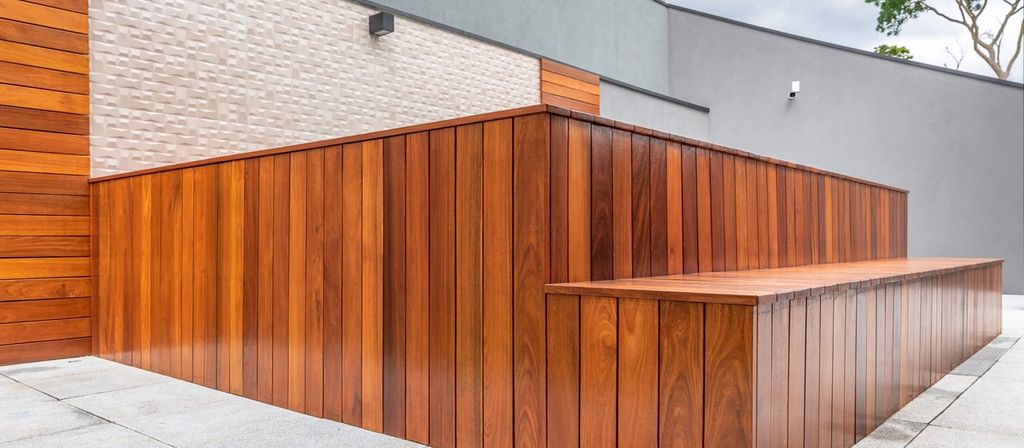
For a deck in the Caribbean, the decision comes down to three things: a dense wood that stays stable in humidity (Ipé, Cumarú, Garapa, Bullet Wood or a Thermowood), a ventilated installation with stainless-steel fixings, and a maintenance plan you choose: oil every year, or let the wood take on its grey patina.
This guide explains how to choose among the five options in the Madeira Tech catalog, what the Dominican climate demands of a deck, and why installation matters as much as the species.
What the Caribbean demands of a deck
A deck in Santo Domingo, Punta Cana or Las Terrenas faces four stresses at once: near-vertical sun most of the year, heavy rain, high humidity and, near the sea, salt. Then comes use: bare feet, furniture, pool water.
So the woods that work here share two traits. High density, which resists wear and slows water absorption. And dimensional stability, so boards neither gap nor twist between the dry and rainy seasons. An untreated softwood meets neither.
The five options, and who each one is for
Ipé: the benchmark
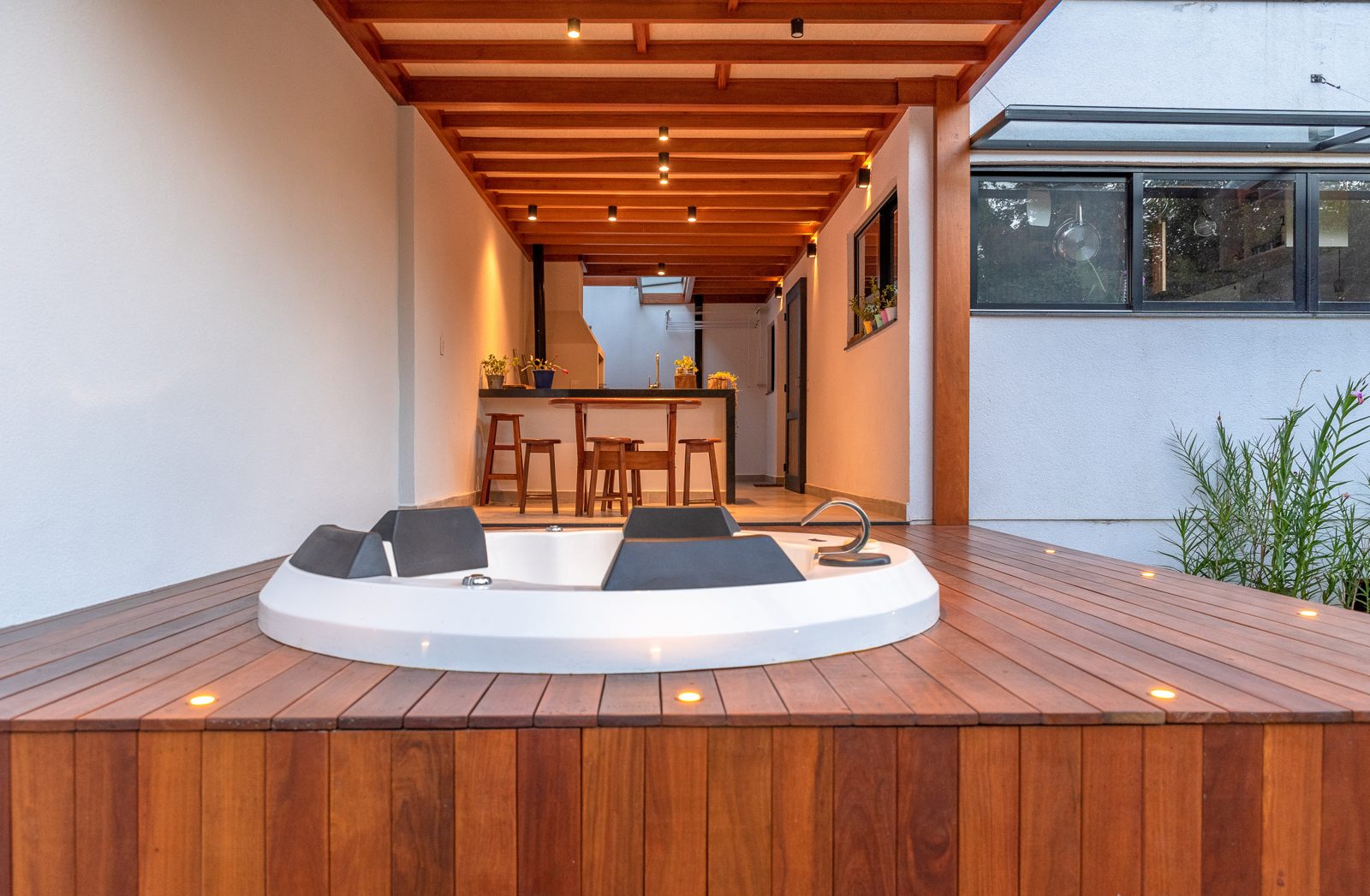
The so-called “ironwood”. It is the densest wood in the catalog and the one that best withstands heavy traffic, moisture and insects without chemical treatment. Its tone runs from reddish brown to dark olive. It is the choice for pool decks, hotels and places where mid-term replacement is not an option. [A validar] The catalog credits it with over 70 years of outdoor service life.
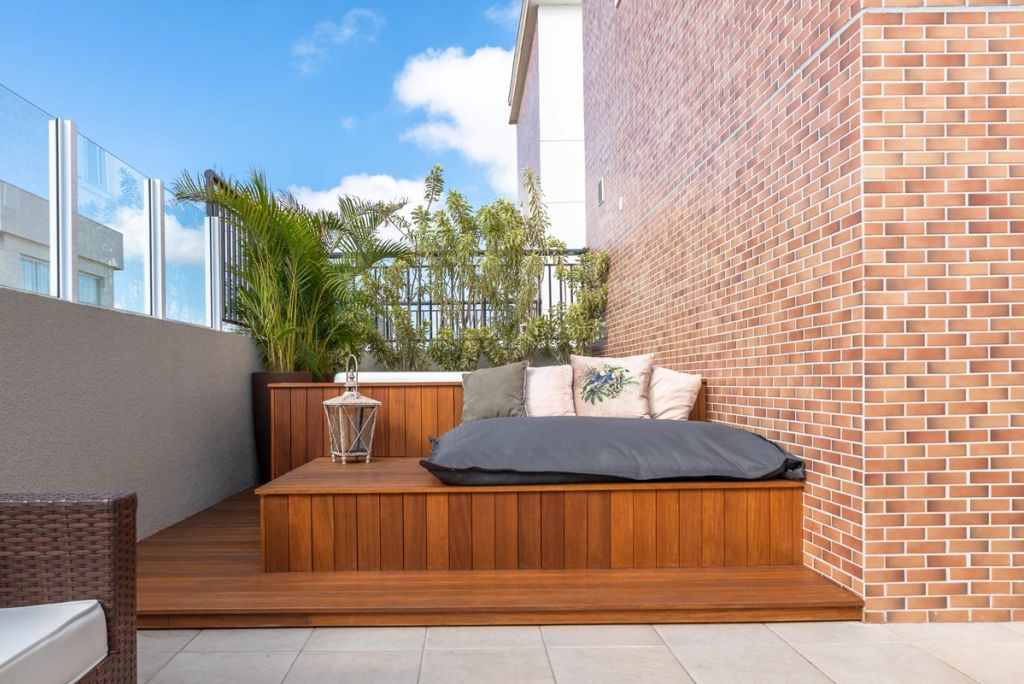
Cumarú: warmth and strength
Almost as dense as Ipé, with a warmer tone between golden and reddish and an expressive grain. It is the alternative when you want Ipé performance in another color, often at a more accessible price. It stands up very well to salt: the catalog recommends it for seafronts.
Garapa: the bright one
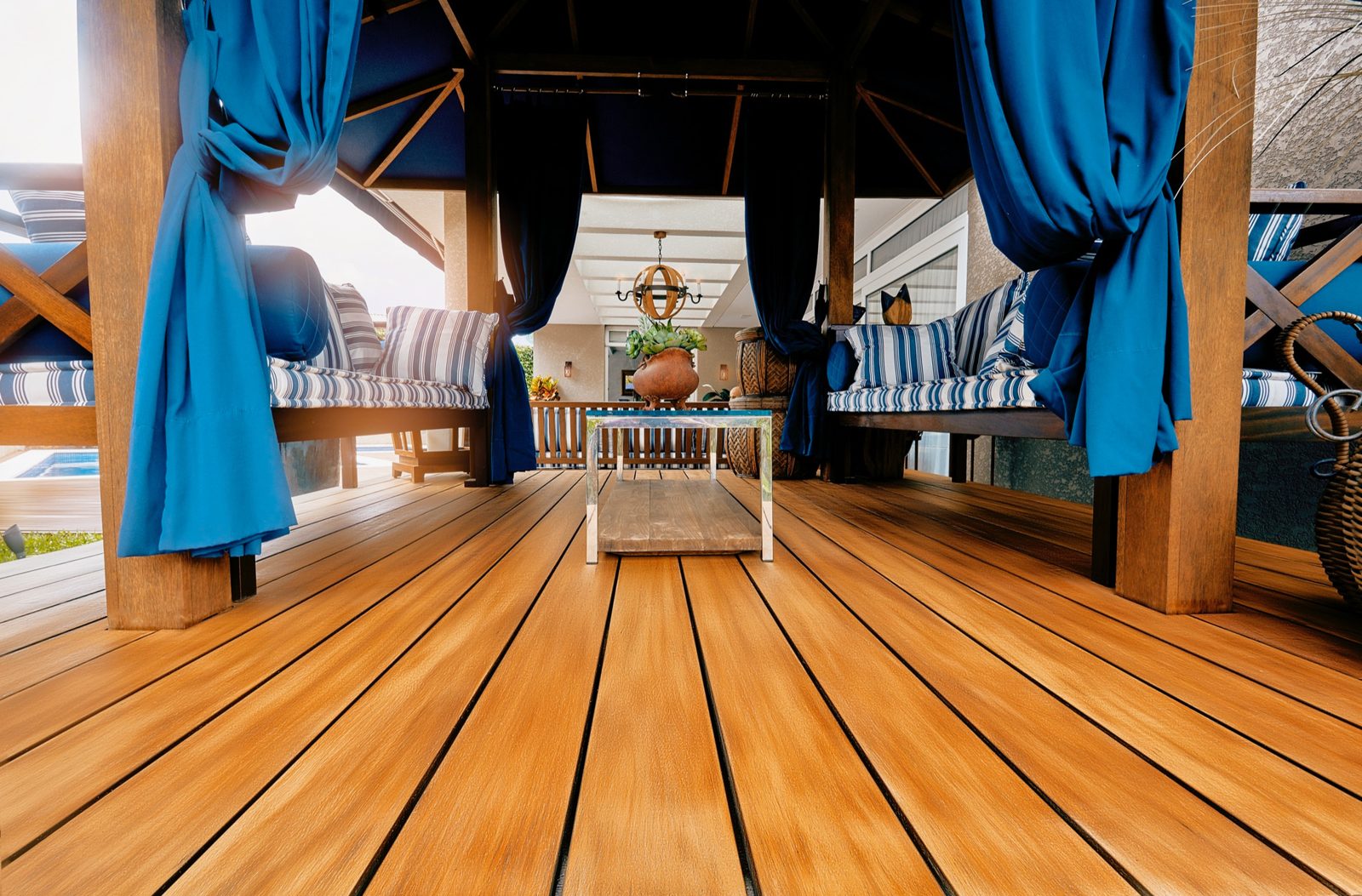
Golden to yellowish brown, lighter and more uniform than the other tropicals. It is the option when the deck should look bright, beside a pool or against a white façade. Dense and stable, though a little less than Ipé. [A validar] The catalog gives 30 to 50 years of outdoor service life.
Bullet Wood: for heavy traffic
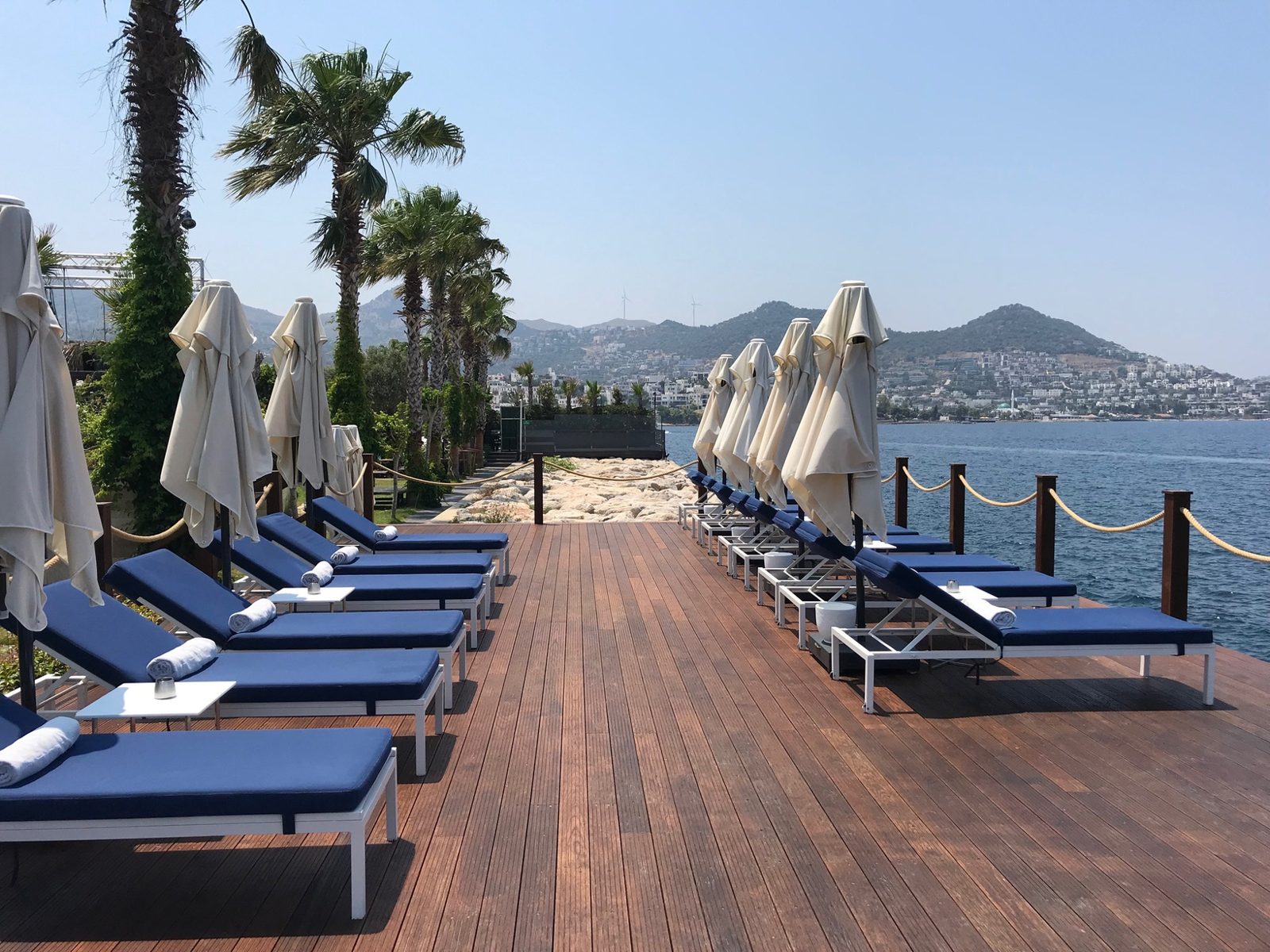
Also called Massaranduba. Extremely hard, with a reddish tone that darkens over time. It is the wood of boardwalks, piers, promenades and public pool areas: wherever wear is enemy number one.
Thermowood: lightness and design
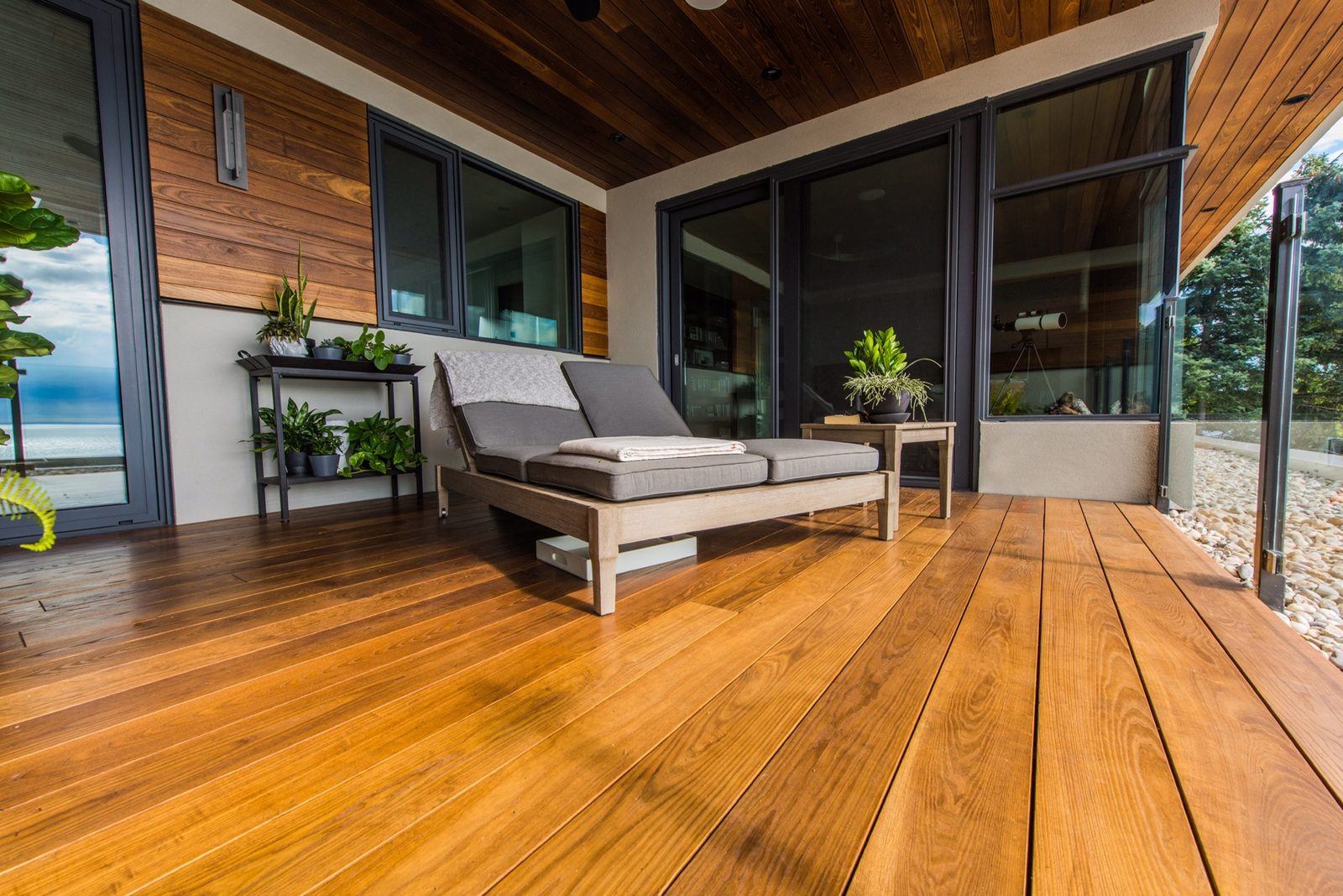
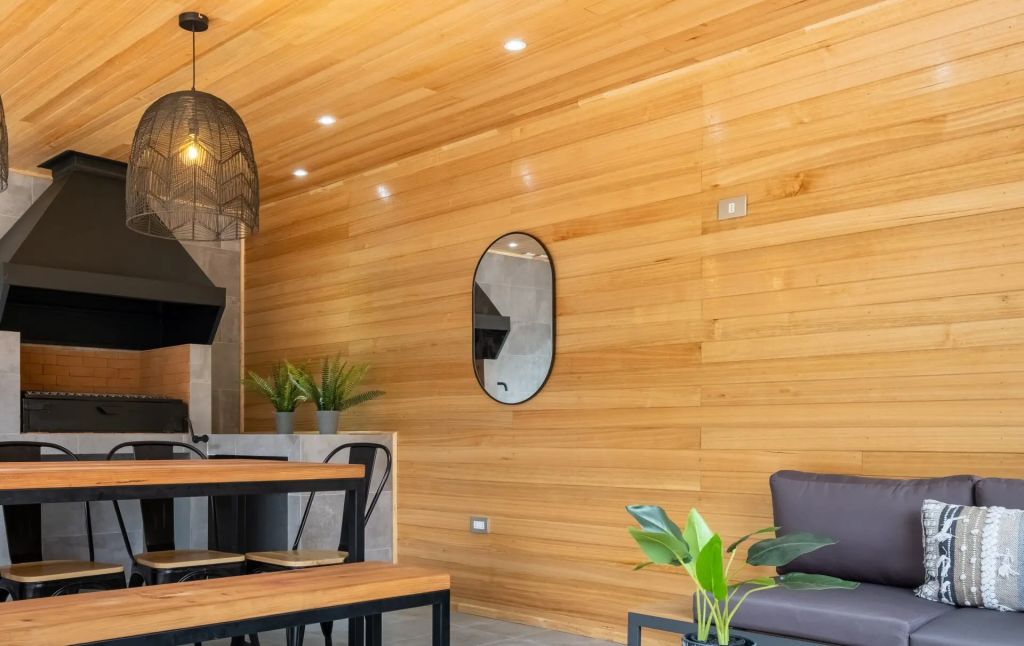
Wood modified with heat and steam, with no biocides in that process, which gains stability and resistance to moisture and fungi. Ash Thermowood, with its pronounced grain and deep tone, is the one the catalog proposes for decks; lighter than a tropical hardwood, it eases installation on rooftops and existing structures. It needs more regular maintenance if you want to keep the color.
In short
- Maximum durability and heavy traffic: Ipé.
- High performance, warm tone and better value: Cumarú.
- A light, bright deck: Garapa.
- Boardwalks, piers and public spaces: Bullet Wood.
- Rooftops, light structures and contemporary design: Ash Thermowood.
What matters more than the species: installation
We have seen Ipé decks fail within a few years and Garapa decks last for decades. The difference is almost never the wood: it is how it was installed. The Madeira Tech technical catalog sets five rules, and all five must be met or the material warranty loses its meaning.
- A level, ventilated, dry base, with at least 10 cm of air between the ground and the frame.
- A support frame of treated timber or metal joists, 40 cm on centre.
- Stainless-steel screws or hidden clips: never ordinary steel, which stains and rusts with salt.
- A 2 to 7 mm gap between boards, so the wood can move without lifting.
- Every cut sealed with protective oil before installation.
Professional installation is key to its durability, stability and optimal performance.
That is why Madeira Tech does not just supply the wood: we support you through the project and the execution. [A validar · new positioning] Ask your advisor about supply with installation.
Maintenance: two paths, both right
Keeping the color
A hardwood oil with UV protection, at least once a year outdoors, up to 18 months depending on use. Before oiling: wash with water and neutral soap and, if the surface is rough, a light sanding at 180 to 220 grit. The catalog recommends CUTEK Extreme Oil for tropicals, with the Colourtone additive for tone.
Letting the grey patina come
If you prefer zero maintenance, the wood can be left unfinished. The sun transforms the surface lignin and the rain washes it away, down to an even silver grey. It is not wear: the inner structure stays intact, and it is reversible with light sanding. It is the usual choice for hotels and seafront homes that want a grey palette without losing the warmth of wood.
Next step
Tell us the use (pool, rooftop, boardwalk), the approximate area in square metres and the city. An advisor proposes the species, profile and finish, and sends you a quote with a cutting list. You can also visit The Studio, our showroom on Calle 4 in Santo Domingo, and see the woods in hand.
Frequently asked questions
What is the best wood for a poolside deck?
[A validar] Ipé, for its density and resistance to moisture and constant traffic; Garapa if you want a light, bright tone. In both cases installation is decisive: a ventilated frame, stainless-steel screws and 2 to 7 mm gaps, so pool water is never trapped.
How often should a tropical hardwood deck be oiled in the Caribbean?
[A validar] At least once a year outdoors, and up to every 18 months depending on use and exposure, with a UV-protection hardwood oil. If you prefer not to oil, the wood takes on an even silver-grey patina without losing strength; that grey is reversible with light sanding.
Ipé or Cumarú: which is the better choice?
[A validar] Both are dense, durable tropicals. Ipé is the benchmark for durability and heavy traffic; Cumarú offers very similar performance with a warmer tone and, often, a more accessible price. The choice depends on the color you want and your budget; your advisor can show you samples of both.
Can a wooden deck be installed on a rooftop?
[A validar] Yes, with a ventilated frame of at least 10 cm of air and a level, waterproofed base. For rooftops and light structures, Ash Thermowood is a good option because of its lower weight; tropicals also work if the structure can take the load. An advisor reviews your case before quoting.